





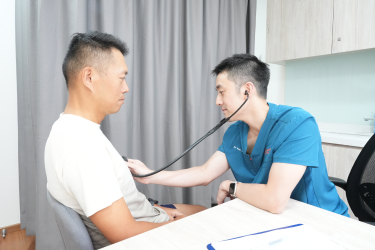
Cardiac Risk Assessment (CVRA) in Singapore

Heart disease is a leading cause of death in Singapore, yet many cases are preventable with early detection and intervention. If you are concerned about your heart health or have a family history of cardiovascular problems, understanding your personal risk level can be an important step.

A comprehensive heart screening in Singapore provides a thorough cardiac risk assessment to evaluate your likelihood of developing heart disease. This proactive approach can help identify warning signs before they progress to serious complications. A cardiologist can guide you through the assessment process and help you take steps towards supporting your heart health.

doctor img
Dr. Kua Jieli

MBBS (SG)|MRCP (UK)|MMed (Internal Med) (SG)|FAMS (Cardiology, SG)

Image hands professor and students with heart in hospit 2025 04 06 11 17 33 utc
Image heart attack senior man suffering from pain in ch 2025 12 21 16 16 37 utc

What is Cardiac Risk Assessment?

developing cardiovascular disease over a specific timeframe, typically the next 10 years. Cardiovascular disease refers to conditions affecting the heart and blood vessels. This assessment helps identify potential risks before symptoms appear, allowing your healthcare provider to recommend preventive measures tailored to your individual risk profile. The evaluation combines multiple factors to calculate your overall heart disease risk, including your medical history, lifestyle habits, family history, and clinical measurements.

The assessment goes beyond simple blood pressure or cholesterol checks. It considers how various risk factors interact and compound. For example, having both high blood pressure and diabetes may increase your risk compared to having either condition alone. A cardiology specialist will interpret these combined factors to set personalised prevention measures based on your specific circumstances.

This highlights why cardiac risk assessment in Singapore is an important tool for preventive healthcare, particularly for adults over 40 or those with known risk factors.

Types of Cardiac Risk Assessment

Clinical Evaluation

Traditional cardiac risk assessment evaluates cardiovascular risk based on commonly recognised clinical factors, including age, gender, blood pressure, cholesterol levels, smoking status, and diabetes. Validated scoring systems are used to calculate a Cardiovascular Risk Assessment (CVRA) score. This score estimates the likelihood of a cardiovascular event over a defined period, categorised as follows:

  • Low Risk: Indicates a relatively low chance of developing cardiovascular disease. Healthcare providers typically advise maintaining a healthy lifestyle and routine monitoring to keep risk factors within a healthy range.
  • Moderate/Intermediate Risk: Represents a higher chance of a cardiac event. A doctor will typically discuss specific lifestyle modifications, such as targeted dietary changes, increased physical activity, and smoking cessation, and may consider the introduction of preventive medications.
  • High Risk: Indicates a high likelihood of a cardiovascular event. Healthcare providers will generally recommend intensive lifestyle changes and are likely to prescribe medications to manage blood pressure or cholesterol levels more aggressively.

A cardiologist can interpret these scores and provide guidance on personalised preventive measures suited to your individual circumstances.

Imaging-Based Assessment

For individuals requiring more detailed evaluation, imaging-based assessments provide direct visualisation of heart and blood vessel health. Coronary artery calcium scoring uses CT scanning to detect calcium deposits in coronary arteries. These deposits indicate atherosclerosis, which is the build-up of fatty deposits that can narrow arteries. This method can help reclassify risk in patients whose traditional scores fall in intermediate ranges.

Comprehensive Metabolic Assessment

This assessment looks more closely at metabolic markers that go beyond standard cholesterol testing. It examines:

  • Detailed lipid profiles
  • Inflammatory markers like high-sensitivity C-reactive protein
  • Additional biomarkers that may indicate cardiovascular stress

This approach may be helpful for individuals with metabolic syndrome, which refers to a group of conditions including high blood pressure, elevated blood sugar, and abnormal cholesterol levels. It can also be useful when standard tests do not fully explain a person’s risk profile.

Genetic Risk Assessment

Genetic testing can help identify inherited tendencies that may increase the likelihood of developing heart disease. This assessment may be useful for individuals with a strong family history of early cardiovascular disease and can guide preventive measures when appropriate. A cardiologist can advise whether genetic testing is suitable for your situation.

Causes and Risk Factors

  • Causes of Cardiovascular Disease

    Cardiovascular disease develops through several mechanisms that damage the heart and blood vessels over time:

    • Atherosclerosis: The gradual build-up of fatty plaques, which narrows the passages for blood flow.
    • Chronic inflammation: Persistent low-grade inflammation that can damage blood vessel linings over time.
    • Endothelial dysfunction: Reduced function of cells lining blood vessels, which usually helps regulate blood flow and prevent clotting. Affects blood flow regulation.
    • Plaque rupture: When unstable plaques break open, they can form blood clots that may lead to a heart attack or stroke.
  • Risk Factors

    Risk factors for heart disease can be classified as modifiable and non-modifiable categories:

    Non-Modifiable Risk Factors:

    • Age: Risk increases with advancing years for men and women
    • Male gender: Men generally have a higher risk, though women’s risk rises after menopause.
    • Family history of premature heart disease
    • Ethnicity: South Asian populations, including Singaporean Indians, may have elevated cardiovascular risk

    Modifiable Risk Factors:

    • High blood pressure (hypertension)
    • Elevated LDL cholesterol and low HDL cholesterol: LDL can build up in artery walls, while HDL helps remove other forms of cholesterol from the bloodstream.
    • Diabetes and prediabetes: Persistently high blood sugar or blood sugar levels above normal but below diabetic range.
    • Smoking and tobacco use
    • Obesity, particularly abdominal obesity
    • Physical inactivity
    • Unhealthy dietary patterns
    • Excessive alcohol consumption
    • Chronic stress and poor sleep quality
    • Obstructive sleep apnoea

Singapore’s multi-ethnic population presents unique considerations. South Asians may develop coronary artery disease at younger ages and with lower cholesterol levels compared to other ethnic groups, making early screening particularly important for overall health.

Signs and Symptoms

Cardiovascular disease often develops silently over many years. The purpose of cardiac risk assessment is to identify risk before symptoms appear. When symptoms do occur, they may indicate that the disease has already progressed.

Early Warning Signs

  • Mild shortness of breath during activities that previously caused no difficulty
  • Occasional chest discomfort, especially with exertion
  • Unexplained fatigue or reduced exercise tolerance
  • Subtle swelling in ankles or feet
  • Heart palpitations or awareness of irregular heartbeat

These early signs are often dismissed or attributed to ageing, stress, or reduced fitness. Recognising them as potential cardiac warning signals can prompt earlier evaluation.

Established Symptoms

  • Chest pain or pressure (angina), particularly during physical activity or emotional stress
  • Significant breathlessness with minimal exertion or while lying flat
  • Persistent swelling in legs, ankles, or abdomen
  • Dizziness or light-headedness
  • Rapid or irregular heartbeat that causes discomfort

Emergency Symptoms

  • Severe chest pain or pressure lasting more than a few minutes
  • Pain radiating to the jaw, neck, shoulders, or arms
  • Sudden severe shortness of breath
  • Cold sweats with chest discomfort
  • Sudden weakness or numbness, particularly on one side
  • Sudden confusion or difficulty speaking

Please seek medical attention promptly if these symptoms occur.

Concerned about your heart health?

Don’t wait for symptoms to develop. Consult our senior cardiologist for a cardiac risk assessment to better understand your heart health and identify potential concerns early.

cta new mobile

When to See a Cardiologist in Singapore

A cardiac risk assessment may be appropriate if any of the following apply to you:

Age-Based Screening:

  • Adults aged 40 and above are encouraged to undergo a baseline cardiovascular risk assessment.
  • Adults aged 18-39 should be screened if they have known risk factors

Risk Factor-Based Screening:

  • Family history of heart disease, particularly if a first-degree relative was affected before age 55 (men) or 65 (women)
  • Personal history of high blood pressure, high cholesterol, or diabetes
  • Current or former smokers
  • Overweight or obese individuals
  • Low levels of regular physical activity
  • History of gestational diabetes or pregnancy-related hypertension

Symptom-Based Evaluation:

  • Any chest discomfort, even if mild or occasional
  • Unexplained shortness of breath
  • Reduced exercise tolerance compared to peers
  • Palpitations

During your initial consultation, your cardiologist will review your medical history, family history, and lifestyle factors, and discuss any symptoms or concerns you may have. They will also advise on appropriate tests or assessments based on your overall risk profile.

Identifying risk factors early allows for timely lifestyle adjustments and preventive measures that may help lower the likelihood of developing cardiovascular complications. If any of these factors apply to you, consider speaking with a cardiologist to understand your heart health better.

Diagnosis and Testing Methods

Clinical Evaluation

The assessment begins with comprehensive history-taking and physical examination. Your cardiologist will document your personal and family medical history, current medications, lifestyle habits, and any symptoms you may have experienced. Your vital signs and cardiovascular system will also be assessed to identify signs that may suggest underlying heart or vascular conditions.

Blood Investigations

Standard blood tests form a foundation of cardiac risk assessment:

  • Lipid panel: Measures the total amount of cholesterol in your blood, LDL cholesterol, HDL cholesterol, and triglycerides
  • Fasting glucose and HbA1c: Assess blood sugar levels to detect diabetes or prediabetes
  • Kidney function tests: Evaluate renal health, which is closely linked to cardiovascular risk
  • Liver function tests: Provide baseline information before starting certain medications

Additional blood markers may include:

  • High-sensitivity C-reactive protein (hs-CRP), which reflects inflammation levels that may contribute to cardiovascular risk
  • Lipoprotein(a), a type of cholesterol particle that indicates inherited cardiovascular risk
  • Apolipoprotein , which reflects the number of cholesterol-carrying particles that can contribute to artery blockages
  • NT-proBNP, a protein released when heart failure is suspected
Electrocardiogram (ECG)

A resting ECG records the heart’s electrical activity. It can help identify previous heart attacks, irregular heart rhythms (arrhythmias), or structural abnormalities. This test is painless, takes only a few minutes, and provides baseline information.

Echocardiogram

An echocardiogram uses ultrasound to create moving images of your heart. It shows the size of the heart chamber, wall thickness, valve function, and how effectively the heart is pumping. It is non-invasive and does not involve radiation.

Exercise Stress Testing

Stress tests evaluate how your heart performs during physical activity. You will exercise on a treadmill or stationary bicycle while your heart’s electrical activity, blood pressure, and any symptoms are monitored. This test can help detect coronary artery disease that may not be apparent at rest.

Coronary Artery Calcium Score

A CT scan measures the amount of calcium deposits in the coronary arteries. Higher scores may indicate greater build-up of fatty deposits and an increased cardiovascular risk. This test may be useful for some patients, and your cardiologist can determine whether it is suitable for your situation and interpret the results based on your individual risk factors. The scan is quick and requires minimal preparation.

CT Coronary Angiography

This non-invasive imaging study uses a CT scanner to provide detailed visualisation of coronary arteries. It identifies blockages and the characteristics of fatty deposits. It may be considered when symptoms suggest coronary disease, but a less invasive test is preferred over catheterisation.

Treatment Options Overview

Lifestyle Modifications

Lifestyle changes are an important part of managing cardiovascular disease. Dietary changes focus on reducing saturated fat and sodium intake while increasing consumption of fruits, vegetables, whole grains, and healthy fats. The Mediterranean diet is often referenced in relation to cardiovascular health.

Physical activity is recommended according to guidelines, which suggest moderate-intensity aerobic activity or vigorous activity at least once weekly, along with muscle-strengthening exercises twice weekly. Even small increases in activity can be considered as part of a routine.

Smoking cessation represents an impactful modifiable risk factor. Cardiovascular risk may begin to decline within weeks of quitting and continue to improve for years thereafter. Your cardiologist can recommend smoking cessation resources and medications to support your quit journey.

Weight management may be considered for individuals who are overweight or obese. Approaches typically emphasise gradual, sustainable adjustments rather than extreme or rapid dieting.

Medications for Cholesterol Management

Medications may be considered for individuals with elevated cholesterol levels or cardiovascular risk factors. These treatments work to manage cholesterol in the body and are selected based on individual patient factors, tolerance, and the level of cholesterol control needed.

For individuals who are unable to use certain medications, alternative options may be considered. Your cardiologist can discuss suitable choices and monitor your response to ensure the approach aligns with your overall cardiovascular assessment.

Blood Pressure Control

Medications may be considered for individuals with elevated blood pressure. Different types of treatments are available, and the choice depends on individual factors such as other health conditions. Some patients may require more than one medication to manage their blood pressure. Your cardiologist can determine which options are suitable and provide guidance on their use.

Home blood pressure monitoring helps track treatment response and identify patterns that in-clinic measurements might miss. Your cardiologist will provide instructions on proper monitoring techniques and discuss appropriate blood pressure ranges for your individual situation.

Diabetes and Glucose Management

For individuals with diabetes or elevated blood sugar, medications may be prescribed to manage glucose levels. The choice of treatment depends on individual health factors, other medical conditions, and overall cardiovascular risk. Your cardiologist can discuss which options are suitable and provide guidance on their use.

Antiplatelet Therapy

Antiplatelet therapy may be considered to reduce the risk of blood clot formation in certain individuals. Its use is guided by current clinical guidelines, which take into account whether cardiovascular disease is already present and other health factors. Your cardiologist will determine whether this therapy is appropriate for your situation.

Interventional Procedures

For individuals with significant coronary artery disease identified during evaluation, interventional procedures may be considered. One common procedure is coronary angioplasty with stenting, which uses a balloon catheter to open narrowed or blocked arteries and places a small scaffold (stent) to help maintain blood flow. Other procedures, such as coronary artery bypass grafting, create new pathways for blood flow around severely blocked arteries. Decisions regarding these interventions are made by a cardiologist based on individual assessment and diagnostic findings.

Complications if Left Unaddressed

Unaddressed cardiovascular risk factors can progressively damage the heart and blood vessels, leading to serious complications:

  • Coronary Artery Disease

    Fatty deposits (plaques) narrow the coronary arteries, reducing blood flow. The condition may initially cause chest pain (angina) and can progress to heart attacks if plaques rupture and arteries become completely blocked.

  • Heart Attack (Myocardial Infarction)

    A complete blockage of the coronary arteries can cause death of heart muscle tissue. Severity depends on the artery affected and the time to treatment. Heart attacks can be fatal or cause permanent heart damage, leading to heart failure.

  • Stroke

    Damage to blood vessels from cardiovascular risk factors can affect arteries supplying the brain. Strokes occur when these arteries are blocked or rupture and may result in disability or death.

  • Heart Failure

    Chronic high blood pressure, coronary artery disease, or heart attack damage can weaken the heart muscle over time. Heart failure may cause breathlessness, fatigue, and fluid retention.

  • Peripheral Arterial Disease

    Fatty deposits in the arteries of the legs can lead to pain while walking. Severe cases may result in tissue death requiring surgical intervention.


  • Chronic Kidney Disease

    Cardiovascular disease and kidney disease often share risk factors. Uncontrolled high blood pressure and diabetes may progressively damage kidney function.

  • Cognitive Decline

    Vascular damage in the brain may contribute to cognitive impairment and vascular dementia, affecting memory and daily functioning.

Individuals with these risk factors are advised to discuss their cardiovascular risk with a cardiologist to determine appropriate monitoring and management.

Every patient’s cardiovascular risk profile is unique.

Consult with Dr Kua Jieli, a Singapore cardiologist, to have your risk factors evaluated and to explore suitable prevention strategies based on your personal circumstances.

cta new mobile

Prevention

Preventing cardiovascular disease begins with understanding and managing your modifiable risk factors:

Dietary Approaches

Adopt a heart-healthy eating pattern that includes fruits, vegetables, whole grains, legumes, nuts, and fish. Limit processed foods, red meat, added sugars, and sodium. In Singapore’s food-centric culture, the focus is on healthier hawker choices and cooking methods rather than a complete dietary overhaul.

Regular Physical Activity

Incorporate movement into daily life beyond structured exercise. Take stairs, walk during lunch breaks, and reduce prolonged sitting. Exercise intensity and duration can be adjusted gradually based on personal capacity.

Tobacco Avoidance

Avoid starting smoking. Those who currently smoke can seek support to quit. Minimise exposure to secondhand smoke and vaping products.

Weight Management

Maintain body weight within a healthy BMI range, with attention to abdominal fat as an indicator of central obesity.

Blood Pressure Monitoring

Be aware of your blood pressure numbers and monitor them regularly.

Regular Health Screening

Arrange routine cardiovascular assessments at your clinic to monitor your heart health and review risk factors with your cardiologist.

Stress Management

Address chronic stress using coping strategies such as mindfulness, exercise, or counselling, and seek support for mental health concerns when needed.

Quality Sleep

Get adequate sleep and address sleep disorders, particularly obstructive sleep apnoea, which can affect cardiovascular risk.

Frequently Asked Questions (FAQs)

When should I start cardiac risk assessment, and how often should it be repeated?

Screening should begin for all adults at age 18. The frequency depends on your age and health profile:

  • Age 18–34: Repeat every 3 years if results are normal.
  • Age 35 and above: Switch to yearly health screenings.
  • High-Risk Individuals: More frequent monitoring is required if you have diabetes, hypertension, obesity, or a family history of heart disease.
  • Special Considerations: South Asians and high-risk groups should consider earlier or more frequent assessments, as heart issues can often be “silent” or present with atypical symptoms.
Is cardiac risk assessment covered by Medisave or insurance?

Cardiac risk assessment is generally not claimable from Medisave as a standalone preventive screening. Medisave may only be used when certain tests are considered medically necessary for the diagnosis or management of a medical condition, in line with CPF Board guidelines.

Insurance coverage varies between plans. Tests performed solely for screening may not be covered. Our clinic staff can share general information on costs and payment options during appointment arrangements.

What if my cardiac risk assessment shows high risk?

A high-risk assessment indicates that certain factors may increase your likelihood of developing cardiovascular disease. Your cardiologist will review these findings with you and explain what they mean for your health. Management may include lifestyle adjustments and, where appropriate, medications. Further tests may be recommended to understand your cardiovascular status more clearly. If you receive a high-risk result, consider discussing a management plan with our cardiologist to address the factors contributing to your risk.

Can cardiac risk assessment detect existing heart disease?

Cardiac risk assessment is mainly used to estimate the likelihood of future heart disease, but certain tests performed during the assessment may also detect existing problems. An ECG can show signs of previous silent heart attacks or abnormal heart rhythms. An echocardiogram can identify structural changes in the heart. Exercise stress testing may reveal issues that appear only during physical activity. CT coronary angiography provides detailed images of the heart arteries and may show areas of narrowing. Our cardiologist will advise on the tests most appropriate for your situation.

Are there any risks associated with cardiac screening tests?

Most cardiac screening tests are non-invasive with minimal risks. Blood tests require a needle prick, which may cause mild bruising. CT-based tests use radiation, although modern scanners are designed to minimise exposure. Exercise stress tests may trigger temporary symptoms such as irregular heartbeats or chest discomfort in some individuals. Our cardiologist will explain any specific risks based on the tests recommended for your situation.

How accurate is cardiac risk assessment?

Cardiac risk assessment tools provide estimates based on population data. They help indicate whether someone falls into a lower, intermediate, or higher risk category, but they cannot predict exactly who will develop cardiovascular disease. These tools are most useful for guiding the intensity of monitoring and management. In some situations, additional imaging tests, such as coronary calcium scoring or cardiac ultrasound, may offer further information by detecting early changes that typical risk factors may not reveal.

What lifestyle changes have the greatest impact on cardiovascular risk?

Key lifestyle measures that support cardiovascular health include avoiding tobacco use, engaging in regular physical activity, following a balanced diet, and maintaining a healthy body weight. Managing blood pressure, cholesterol, and blood sugar through lifestyle measures and prescribed treatment also plays an important role. No single change addresses all risk factors. A combination of healthy habits, together with appropriate medical care when required, contributes to overall risk management.

Conclusion

Understanding your cardiovascular risk helps you to make informed decisions about your health. Cardiac risk assessment in Singapore provides an evaluation of your heart health and identifies risk factors that can be discussed with a cardiologist for appropriate management.

Heart disease develops gradually over many years, allowing time for monitoring and management of risk factors. Whether your assessment reveals low, intermediate, or high risk, our cardiologist can advise on measures suitable for your individual situation, taking into account factors such as age, family history, existing medical conditions, and lifestyle. Lifestyle measures may be recommended for all, while higher-risk individuals may also be considered for medical therapies where appropriate.

Taking proactive steps to understand your heart health supports informed decisions and ongoing monitoring. Early detection enables timely discussion of management options for cardiovascular disease.

Take Charge of Your Heart Health Today

Your heart plays a vital role in your overall health. A cardiac risk assessment helps you understand your cardiovascular risk and discuss appropriate management with a cardiologist.

Dr Kua Jiele provides a comprehensive cardiac risk assessment, reviewing your individual risk factors and advising on appropriate steps for your situation.

cta new mobile
Frame 1894

Dr. Kua Jieli

MBBS (SG)|MRCP (UK)|MMed (Internal Med) (SG)|FAMS (Cardiology, SG)

Dr. Kua is a senior consultant cardiologist specialised in interventional cardiology and is the medical director at Carrington Cardiology.

  • He is experienced in managing complex coronary artery disease and a variety of other cardiovascular diseases and conditions.
  • He also handles difficult coronary interventional procedures such as left main disease, chronic total occlusions, and calcified lesions.
  • He served as a Senior Consultant at National University Hospital Singapore and Ng Teng Fong General Hospital and was also the Director of the Cardiovascular Catheterisation Laboratory.

Prior to this, he served as an International Cardiology Fellow and Honorary Consultant at Hammersmith Hospital Imperial Healthcare Trust, where he gained valuable experience in various prestigious healthcare institutions.

Location Contact Background
Image location

Mount Elizabeth Medical Centre
3 Mount Elizabeth, #12-02 Medical Centre
Singapore 228510

Image time

Mon to Fri: 09:00am – 05:00pm
Sat: 09:00am – 12:30pm
Sun & Public Holidays: Closed

Get In Touch With Us

Leave us a message and we’ll get back to you shortly


    Full Name*

    Email Address*

    Phone Number*

    Your Message*

    For faster response, call our 24/7 hotline!

    +65‎ 6956‎ 6588


    Image location

    Mount Elizabeth Medical Centre
    3 Mount Elizabeth, #12-02 Medical Centre
    Singapore 228510

    Image time

    Mon to Fri: 09:00am – 05:00pm
    Sat: 09:00am – 12:30pm
    Sun & Public Holidays: Closed