
CIMT Test in Singapore: Specialist-Interpreted Cardiovascular Artery Screening

Cardiovascular disease accounts for approximately 31% of deaths in Singapore. However, arterial changes that may lead to heart attack or stroke often develop silently over many years without producing noticeable symptoms.

A Carotid Intima-Media Thickness (CIMT) test uses high-resolution ultrasound to assess structural changes in the artery walls at an early, subclinical stage. It may help identify early signs of atherosclerosis before significant narrowing or symptoms develop, supporting earlier cardiovascular risk assessment and preventive care planning.

At Carrington Cardiology, CIMT imaging is not offered as a standalone screening package. It is performed as part of a structured cardiovascular risk assessment conducted by Dr Kua Jieli, our interventional cardiologist, and interpreted alongside your blood tests, blood pressure readings, and clinical history. This integrated approach allows imaging findings to be assessed in the context of your overall cardiovascular risk profile, supporting a more comprehensive and individualised evaluation.

doctor img
Dr. Kua Jieli

MBBS (SG)|MRCP (UK)|MMed (Internal Med) (SG)|FAMS (Cardiology, SG)

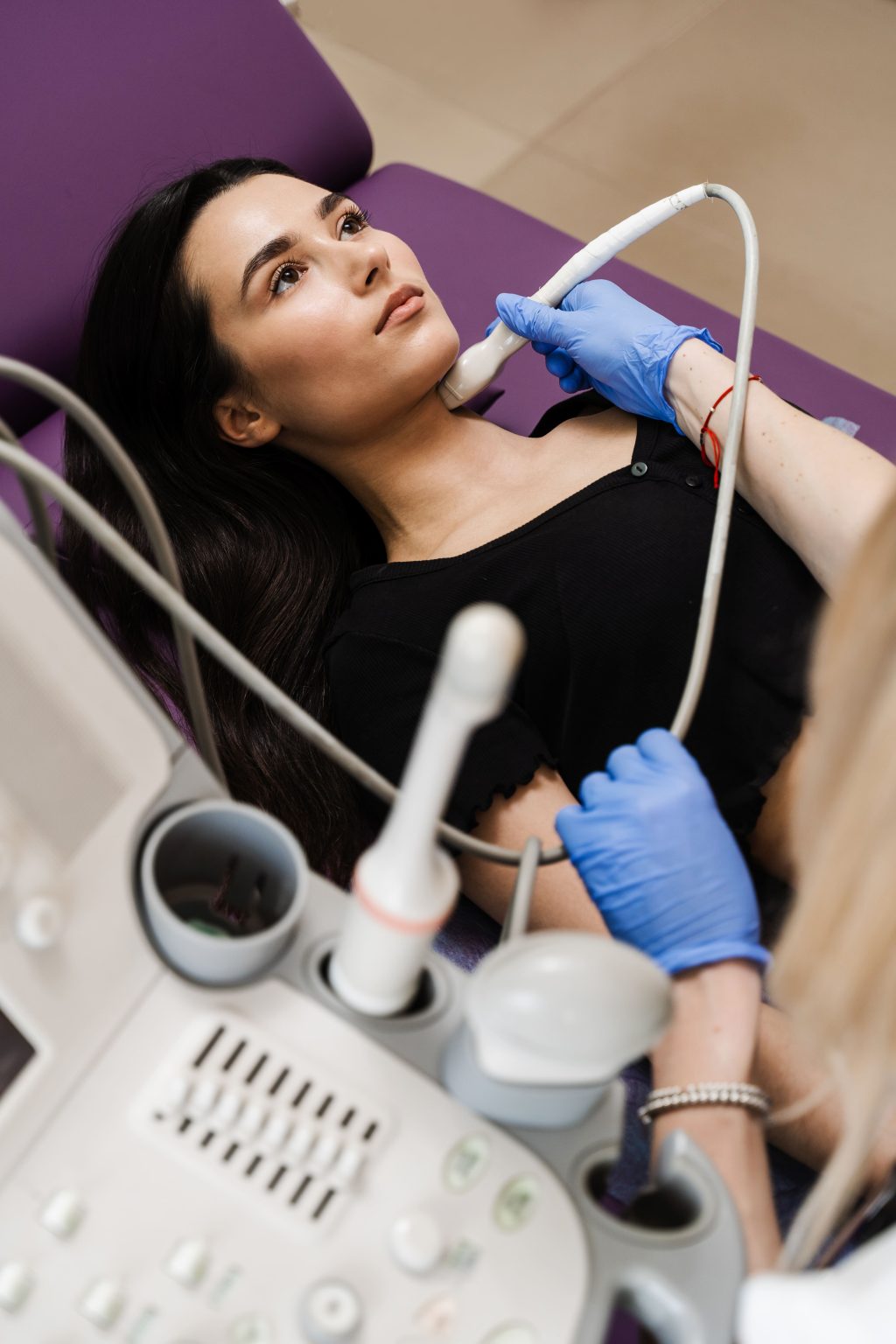
A young woman undergoing a thyroid ultrasound in a clinic setting.

What Is a CIMT Test?

A Carotid Intima-Media Thickness (CIMT) test is a non-invasive ultrasound assessment used to measure the thickness of two layers within the walls of the carotid arteries: the intima (the inner lining of the artery) and the media (the muscular middle layer of the artery wall). The carotid arteries are major blood vessels in the neck that supply blood to the brain.

An increase in the thickness of these artery walls may reflect early vascular changes associated with atherosclerosis, a condition involving the buildup of fatty deposits and inflammation within the arteries.

Atherosclerosis is associated with an increased risk of cardiovascular conditions such as heart attack and stroke.

Because vascular changes can occur throughout the circulatory system, increased carotid intima-media thickness may also be associated with changes in other arteries, including the coronary arteries that supply the heart.

CIMT vs. Carotid Doppler Ultrasound: Key Differences

The ambulatory blood pressure monitoring process is straightforward and takes place primarily in your own environment.

What it measures
Thickness of the artery wall (early structural change) Blood flow and possible narrowing or blockage
Primary purpose
Cardiovascular risk assessment Evaluation of existing blood flow abnormalities or blockage
Stage of vascular disease assessed
Early or subclinical vascular changes More established vascular narrowing or flow disturbance
When it is commonly used
Often performed in asymptomatic individuals as part of risk assessment Commonly performed when symptoms or significant vascular disease are suspected

Who Should Consider a CIMT Test in Singapore?

CIMT testing is a targeted cardiovascular assessment tool rather than a routine screening test for everyone.

At Carrington Cardiology, Dr Kua Jieli evaluates your overall cardiovascular profile before recommending CIMT, helping determine whether the test may provide additional information relevant to your risk assessment.

Risk Factors That May Prompt a Referral

Your doctor may consider CIMT testing if you have one or more of the following cardiovascular risk factors:

  • Family history of heart disease or stroke, particularly at a younger age. Elevated cholesterol levels or triglyceride levels
  • High blood pressure, especially if persistent or difficult to control
  • Type 2 diabetes or insulin resistance, metabolic syndrome, including abdominal obesity, elevated blood sugar, and abnormal cholesterol levels
  • Borderline or intermediate cardiovascular risk scores where additional assessment may be helpful

The Intermediate-Risk Patient

CIMT testing may be most relevant for individuals who fall into the intermediate cardiovascular risk category based on established risk assessment tools such as the 10-year cardiovascular risk calculators (e.g. Framingham or atherosclerotic cardiovascular disease (ASCVD) risk estimation models). These tools estimate your likelihood of developing cardiovascular disease over the next 10 years based on factors such as:

  • Age and gender
  • Blood pressure
  • Cholesterol levels
  • Smoking status
  • Presence of diabetes

In general clinical practice:

  • Low risk: No major risk factors, or low estimated 10-year cardiovascular risk
  • Intermediate risk: Presence of some risk factors, with an estimated risk that is not clearly low or high
  • High risk: Established cardiovascular disease or multiple significant risk factors resulting in a higher estimated risk

For individuals in the intermediate-risk range, standard risk calculators may not fully reflect early structural changes in the arteries.

In these cases, CIMT imaging may provide additional information about arterial wall structure, which can be considered alongside blood tests, blood pressure readings, and clinical history to support a more individualised cardiovascular assessment.

Unsure whether your risk factors warrant further cardiovascular assessment?

A consultation at Carrington Cardiology can help evaluate your cardiovascular risk profile and determine whether CIMT testing may be appropriate as part of your assessment.

cta new mobile

How Does the CIMT Test Work?

The Imaging Process

A CIMT test uses high-resolution ultrasound imaging to assess the walls of the carotid arteries in the neck.

During the scan, a specialist or trained cardiac sonographer places an ultrasound probe (transducer) gently against the skin of your neck. Sound waves are directed toward the carotid artery and reflected to produce real-time images of the artery wall on a monitor.

The scan allows measurement of the intima-media thickness — the combined thickness of the inner layers of the artery wall — which is reported in millimetres.

Area Commonly Assessed

Several sections of the carotid artery are typically evaluated during the scan, including:

  • The common carotid artery
  • The carotid bulb, where the artery widens before branching
  • The proximal internal carotid artery

Both the left and right carotid arteries are usually assessed.

Depending on the imaging protocol, multiple measurements may be taken and analysed together.

Duration and Practical Details

The procedure generally takes around 15 to 30 minutes.

It does not involve:

  • Radiation
  • Contrast dye
  • Injections or needles

A water-based ultrasound gel is applied to the neck to improve image quality. During the scan, you will lie comfortably on an examination bed with your head turned slightly to allow access to the carotid arteries.

After the test, the gel is removed, and you can typically resume normal activities immediately.

The Importance of Technique and Standardisation

Accurate CIMT measurement depends on careful imaging technique and consistent measurement methods.

Factors such as probe positioning, image angle, and anatomical landmarks can influence the readings obtained. At Carrington Cardiology, CIMT imaging is performed using a standardised assessment protocol by trained cardiac imaging personnel.

This consistency is particularly important when comparing measurements over time as part of an ongoing cardiovascular assessment.

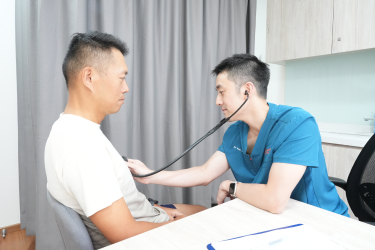
A patient is talking with a doctor in a medical office setting.

Preparing for Your CIMT Test

Preparation for a CIMT test is usually straightforward. Because the scan is non-invasive, fasting, sedation, and medication adjustments are generally not required for the ultrasound itself unless otherwise advised by your doctor.

Before your appointment, it may help to:

  • Wear a loose-fitting top or clothing with an open neckline
  • Avoid applying lotions, creams, or powders to the neck area on the day of the scan
  • Avoid wearing necklaces or large earrings
  • Bring previous cardiovascular investigation results, if available
A healthcare professional in gloves holding a blood sample vial while preparing for testing on a patient's arm.

Concurrent Blood Tests and Baseline Assessments

In some cases, your specialist may recommend blood tests alongside the CIMT assessment. These may include a lipid panel (cholesterol and triglycerides), fasting glucose or HbA1c (blood sugar assessment), and high-sensitivity C-reactive protein (hs-CRP), an inflammatory marker.

If fasting blood tests are required, the clinic will provide specific preparation instructions beforehand. CIMT findings are typically interpreted together with other cardiovascular risk factors, including blood pressure, cholesterol levels, blood sugar control, medical history, and lifestyle factors. This combined approach allows the scan results to be assessed within the broader context of your cardiovascular health profile.

Understanding Your CIMT Test Results

CIMT measurements are reported in millimetres and interpreted using age- and sex-adjusted reference ranges derived from population data.

Result
What It Suggests
Typical Next Step
Below 25th percentile Artery wall thickness is lower relative to age-matched reference ranges Continue routine cardiovascular risk management and healthy lifestyle measures
25th–75th percentile Findings fall within the average reference range Interpretation depends on the overall cardiovascular risk profile
Above 75th percentile Artery wall thickness is higher relative to reference ranges and may be associated with increased cardiovascular risk Further cardiovascular risk assessment or management may be considered


Important: A CIMT result alone does not diagnose cardiovascular disease. An elevated CIMT reading does not mean a person will develop a heart attack or stroke, and a lower reading does not exclude the presence of plaque or vascular disease elsewhere in the body. Interpretation should always be made in the context of your overall cardiovascular risk profile and clinical assessment.

Tracking Changes Over Time: Longitudinal CIMT Monitoring

In some cases, your specialist may recommend repeat CIMT assessments over time to monitor changes in arterial wall thickness.

When performed using a consistent imaging protocol, serial CIMT measurements may help assess whether vascular changes remain stable or progress alongside ongoing cardiovascular risk management and lifestyle modification.

How Much Does a CIMT Test Cost in Singapore?

The cost of CIMT testing in Singapore may vary depending on the clinic, whether specialist consultation is included, and whether additional investigations are performed at the same visit.

At specialist cardiology clinics, CIMT assessment is often performed as part of a broader cardiovascular evaluation.

   
Cost Component Notes
Specialist consultation Fees vary depending on the specialist and clinic.
CIMT ultrasound imaging May be performed as a standalone assessment or within a cardiovascular screening package.
Results review and counselling Typically discussed during the consultation.
Blood tests (if required) May include cholesterol profile, HbA1c, hs-CRP, or other investigations.
Insurance / Medisave considerations Coverage varies depending on policy terms and clinical indication.

Related Cardiovascular Screening Tests

CIMT is one component of cardiovascular risk assessment. Different investigations evaluate different aspects of heart and vascular health and may be recommended based on your individual clinical profile.

  • Coronary Artery Calcium (CAC) Scoring

    A CAC score is obtained through a CT scan and measures calcium deposits within the coronary arteries. While CIMT assesses structural changes in the artery wall, CAC scoring evaluates calcified plaque within the coronary circulation. Depending on your cardiovascular risk profile, your specialist may recommend one or both investigations.

  • Ankle-Brachial Index (ABI)

    The ABI compares blood pressure measurements taken at the ankle and arm. Significant differences between the readings may suggest peripheral arterial disease, which involves the narrowing of the arteries supplying the legs.

  • Exercise Stress Testing

    An exercise stress test evaluates how the heart responds during physical exertion. It may help assess heart rhythm, blood pressure response, and possible signs of reduced blood flow during exercise. Unlike CIMT, which evaluates vascular structure, stress testing focuses on cardiovascular function during activity.

Limitations and What CIMT Cannot Tell You

No cardiovascular screening test is without limitations, and CIMT should always be interpreted within the context of your overall cardiovascular assessment. CIMT measures artery wall thickness, but it does not directly assess blood flow or determine whether a significant blockage is present within the carotid or coronary arteries.

The test also does not evaluate plaque composition. Increased wall thickness may reflect vascular changes associated with atherosclerosis, while a lower CIMT value does not exclude the presence of plaque or vascular disease elsewhere in the body.

CIMT is focused on vascular structure and does not assess:

  • Heart muscle function
  • Heart valve function
  • Cardiac rhythm or electrical activity

Additional investigations may be required depending on your symptoms, risk profile, and clinical findings.

As with many imaging-based assessments, some measurement variability can occur between operators, equipment, and imaging protocols. When repeat CIMT assessments are performed, consistency in imaging technique and follow-up protocols may help improve comparison over time.

The role of CIMT in cardiovascular risk prediction continues to evolve alongside ongoing research and clinical guideline development. Our cardiologist will assess whether CIMT is appropriate and how the findings should be interpreted in the context of your individual cardiovascular risk profile.

Frequently Asked Questions About CIMT Testing in Singapore

Is the CIMT test painful?

No. A CIMT test is a non-invasive ultrasound procedure. A gel is applied to the neck and a probe is placed gently on the skin to obtain images. There are no needles, incisions, or injections. You may feel mild pressure from the probe, but the test is generally not painful.

How long does a CIMT test take?

The scan typically takes around 15 to 30 minutes. If blood tests or a consultation are performed on the same day, additional time may be required.

How often should I repeat the CIMT test?

The timing of repeat CIMT assessments depends on your individual cardiovascular risk profile and your specialist’s recommendation. There is no fixed interval, as repeat testing may be used differently depending on whether it is being done for baseline assessment, risk evaluation, or monitoring over time.

Can CIMT detect a blockage?

No. CIMT measures the thickness of the artery wall and does not directly assess blood flow or identify significant narrowing within the artery. If a blockage is suspected, a carotid Doppler ultrasound may be recommended as it evaluates blood flow through the arteries.

What is the normal range for CIMT in Singapore?

CIMT results are interpreted using age- and sex-adjusted reference ranges based on population data, rather than a single universal “normal” value. Our specialist will interpret your result in context with your overall cardiovascular risk profile and other clinical findings.

Is the CIMT test covered by Medisave or insurance in Singapore?

Coverage varies depending on your insurance plan and the clinical indication for the test. It is recommended to check with your insurer and confirm with the clinic prior to your appointment.

What is the difference between CIMT and a carotid Doppler?

A CIMT test assesses the thickness of the artery wall and is used as part of cardiovascular risk evaluation, while a carotid Doppler ultrasound evaluates blood flow and can help detect narrowing or blockages in the carotid arteries.

They assess different aspects of vascular health and may be used together depending on clinical need.

Can lifestyle changes affect my CIMT result?

Some studies suggest that managing cardiovascular risk factors — such as regular exercise, a balanced diet, smoking cessation, and blood pressure control — may help slow the progression of arterial wall thickening in certain individuals.

Responses vary between patients, and any lifestyle or treatment plan should be discussed with our cardiologist.

At what age should I consider a CIMT test?

There is no specific recommended age for CIMT testing. The decision depends on individual risk factors, family history, and clinical assessment. Patients with multiple cardiovascular risk factors may be considered for earlier evaluation.

Do I need a doctor’s referral to get a CIMT test at Carrington Cardiology?

A referral is not strictly required. You may contact us directly to arrange a consultation with our cardiologist, who will assess whether CIMT testing is appropriate as part of your cardiovascular evaluation.

Received a CIMT result and unsure how to interpret the findings?

A specialist consultation can help place your CIMT findings in the context of your cardiovascular risk factors, blood test results, and clinical history to guide further assessment and management discussions.

cta new mobile

Why Choose Carrington Cardiology for Your CIMT Assessment?


Clinical Approach What This Means for You
Specialist cardiologist review CIMT findings are reviewed by Dr Kua Jieli, our cardiologist, within the context of your cardiovascular history, risk factors, and other investigations.
Integrated cardiovascular assessment CIMT findings are interpreted together with blood pressure, cholesterol levels, blood sugar control, lifestyle factors, and family history.
Structured follow-up capability Where appropriate, repeat CIMT assessments may be performed using a consistent imaging protocol to support comparison over time.
Assessment of intermediate-risk patients CIMT may provide additional vascular information in selected patients whose cardiovascular risk profile is not clearly low or high based on standard assessment tools alone.
Evidence-based clinical approach Recommendations are guided by clinical assessment, imaging findings, and current cardiovascular risk management principles.
Transparent discussion of fees and coverage Consultation fees, investigation costs, and possible insurance or MediSave considerations are discussed during the appointment process.

Take the First Step Toward Knowing Your Cardiovascular Risk

A CIMT assessment may be considered as part of a broader cardiovascular evaluation based on your individual risk profile and clinical history.

Consultations at Carrington Cardiology are structured to integrate imaging findings with relevant blood tests, cardiovascular risk factors, and specialist clinical assessment.

cta new mobile
Frame 1894

Dr. Kua Jieli

MBBS (SG)|MRCP (UK)|MMed (Internal Med) (SG)|FAMS (Cardiology, SG)

Dr. Kua is a senior consultant cardiologist specialised in interventional cardiology and is the medical director at Carrington Cardiology.

  • He is experienced in managing complex coronary artery disease and a variety of other cardiovascular diseases and conditions.
  • He also handles difficult coronary interventional procedures such as left main disease, chronic total occlusions, and calcified lesions.
  • He served as a Senior Consultant at National University Hospital Singapore and Ng Teng Fong General Hospital and was also the Director of the Cardiovascular Catheterisation Laboratory.

Prior to this, he served as an International Cardiology Fellow and Honorary Consultant at Hammersmith Hospital Imperial Healthcare Trust, where he gained valuable experience in various prestigious healthcare institutions.

Location Contact Background
Image location

Mount Elizabeth Medical Centre
3 Mount Elizabeth, #12-02 Medical Centre
Singapore 228510

Image time

Mon to Fri: 09:00am – 05:00pm
Sat: 09:00am – 12:30pm
Sun & Public Holidays: Closed

Get In Touch With Us

Leave us a message and we’ll get back to you shortly


    Full Name*

    Email Address*

    Phone Number*

    Your Message*

    For faster response, call our 24/7 hotline!

    +65‎ 6956‎ 6588


    Image location

    Mount Elizabeth Medical Centre
    3 Mount Elizabeth, #12-02 Medical Centre
    Singapore 228510

    Image time

    Mon to Fri: 09:00am – 05:00pm
    Sat: 09:00am – 12:30pm
    Sun & Public Holidays: Closed