
Gout in Your Big Toe? It Might Not Just Be a Joint Problem

When sudden, intense pain strikes your big toe — often in the middle of the night — most people assume it is just a gout flare.
However, that swollen, inflamed joint may be signalling something more than just a temporary issue. Gout, particularly when it affects the big toe (medically known as podagra), often serves as an early warning sign of underlying cardiovascular problems. The connection runs deeper than many people realise. Elevated uric acid — the substance responsible for painful crystal deposits in your joints — does not only affect your toes. It may also affect blood vessels, contribute to inflammation throughout your body, and play a role in long-term cardiovascular risk.
Understanding this link can support earlier medical evaluations and better long-term management.
The Link Between Gout and Your Risk for Heart Disease
Gout occurs when uric acid — a natural waste product from the breakdown of purines in food and normal cell turnover — builds up faster than the body can remove it. Under normal conditions, uric acid is filtered by the kidneys and excreted in urine. When levels become too high, they can form tiny, needle-like crystals in the joints, triggering inflammation and pain. This explains why gout attacks often occur suddenly and can be particularly painful in the big toe.
While the symptoms appear localised, the underlying issue affects the body more broadly, where elevated uric acid levels are associated with changes in blood vessels and increased inflammation, which may influence cardiovascular health over time.
Research suggests that individuals with gout may have an increased risk of cardiovascular conditions, including heart disease and stroke. The relationship works both ways. Conditions such as high blood pressure, obesity, and kidney disease may increase uric acid levels. Over time, this may create a reinforcing cycle between the two.
Inflammation: The Common Thread
When uric acid crystals form in your big toe, your immune system triggers an inflammatory response. White blood cells release inflammatory molecules called cytokines, which cause redness, swelling and pain of a gout attack.
These inflammatory molecules do not stay confined to the joints. Instead, they can circulate throughout your bloodstream, contributing to chronic, low-grade inflammation in the body.
Over time, this systemic inflammation can make arterial plaques less stable and more likely to rupture, which can increase the risk of heart attacks or strokes. Studies show that people with gout have higher levels of C-reactive protein (CRP), a marker of inflammation in the blood, which is associated with increased cardiovascular risk.
High Blood Pressure
Elevated uric acid may interfere with your body’s production of nitric oxide, a molecule that helps blood vessels relax and maintain healthy blood flow. When nitric oxide function is impaired, blood vessels may become stiffer and less able to regulate blood pressure properly. This creates a problematic cycle: higher uric acid levels may contribute to hypertension, which in turn may impair kidney function and reduce its ability to remove uric acid efficiently.
Some blood pressure medications used to help remove excess fluid from the body may increase uric acid levels and potentially trigger gout attacks. On the other hand, certain blood pressure medications such as losartan may have mild uric acid-lowering effects, which may be considered in patients with both conditions.
Obesity and Diabetes
The connection becomes even clearer when considering metabolic syndrome, which includes excess abdominal weight, high blood pressure, elevated blood sugar, and abnormal cholesterol levels. These conditions frequently occur together and may increase both uric acid levels and cardiovascular risk. Excess body weight may increase uric acid production, while insulin resistance (a hallmark of type 2 diabetes) reduces the kidneys’ ability to excrete it. As a result, gout is often part of a broader metabolic condition rather than an isolated joint issue.
Symptoms of Gout in the Big Toe
Recognising common gout symptoms early is important for appropriate management:
- Intense joint pain: Often peaks within 12-24 hours.
- Inflammation and redness: The joint becomes noticeably swollen, warm, and red or purplish.
- Limited range of motion: Limited movement due to severe pain.
- Lingering discomfort: Joint discomfort may persist for days to weeks after an attack.
The big toe is the most commonly affected joint, particularly during the first episode. This occurs because the big toe joint experiences significant mechanical stress, has a lower temperature than core body areas, and is particularly vulnerable to crystal formation.
Without proper management, gout attacks may become more frequent and affect additional joints. More importantly, each attack signals that persistently elevated uric acid may continue to affect overall health, including the cardiovascular system.
How Gout May Increase Cardiovascular Disease Risk
Several mechanisms help explain the relationship:
- Direct vascular effect: Elevated uric acid may affect the endothelium, the thin inner lining of blood vessels, making it easier for cholesterol to accumulate in vessel walls, an early step in atherosclerosis.
- Chronic inflammation: Inflammatory molecules released during gout attacks may contribute to ongoing cardiovascular inflammation, which may destabilise arterial plaques.
- Kidney involvement: Your kidneys play crucial roles in both uric acid excretion and blood pressure regulation. When kidney function declines, both gout and cardiovascular disease worsen.
- Shared risk factors: Conditions such as hypertension, diabetes and high cholesterol often coexist with gout.
Together, these factors help explain why gout is associated with increased cardiovascular risk.
Studies suggest that individuals with gout may have an increased risk of:
- Heart failure
- Ischaemic heart disease
- Stroke
These risks may persist even after accounting for other cardiovascular factors, suggesting that gout may independently contribute to cardiovascular disease risk.
How to Lower Your Heart Disease Risk
Manage Uric Acid Levels
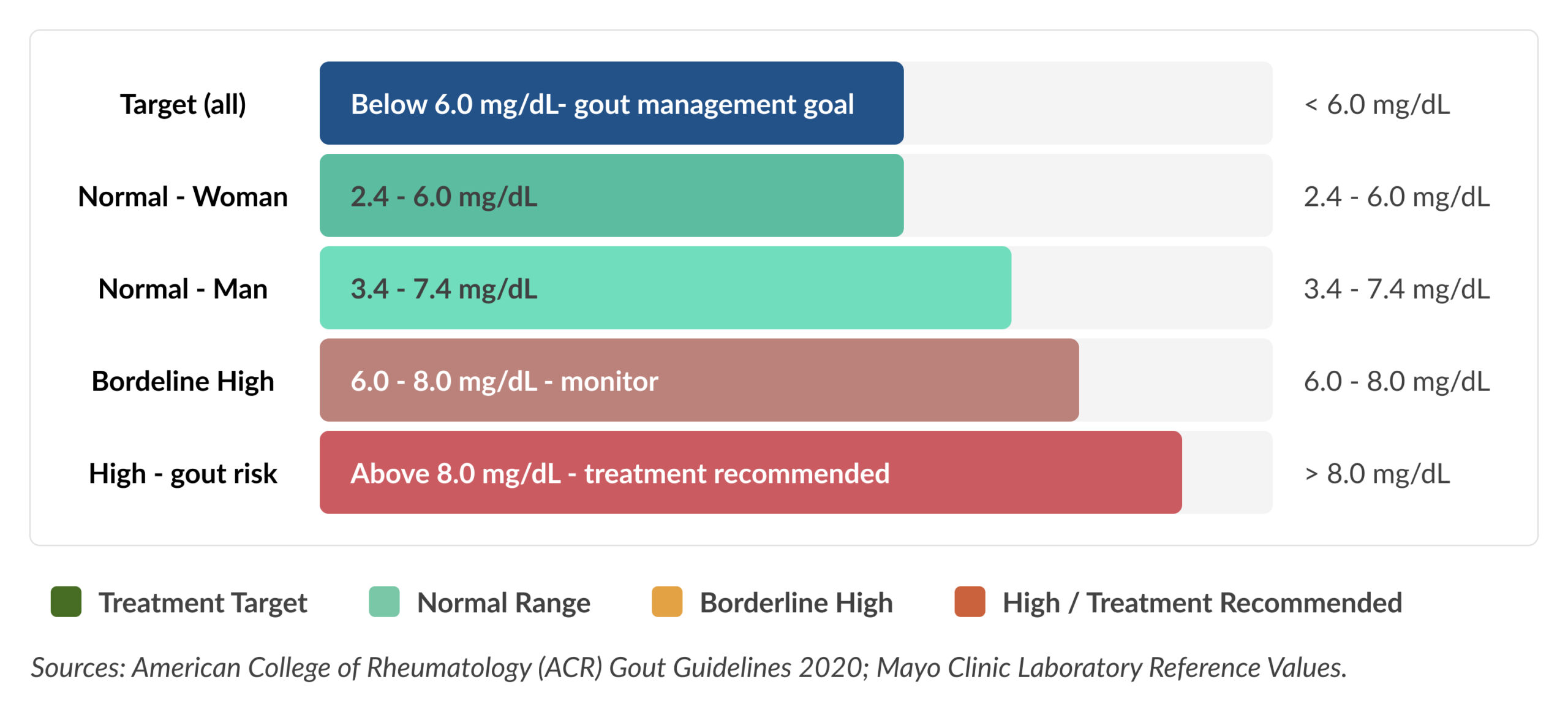
If you have been prescribed uric acid-lowering medications, take them consistently, even between attacks. The target is keeping uric acid below 6 mg/dL — this may help reduce both gout flares and cardiovascular risk.
Adopt a Heart-Healthy Diet
- Limit purine-rich foods: Reduce intake of organ meats, certain seafood (such as anchovies and sardines), and red meat.
- Limit sugary drinks: Limit fructose and replace soft drinks with water.
- Choosing balanced, whole foods may actually lower uric acid levels.
- Follow the DASH diet: Emphasises vegetables, fruits, whole grains, and lean proteins whilst limiting sodium.
Maintain a Healthy Weight
Gradual and sustainable weight management may help improve both uric acid levels and cardiovascular health. Aim for steady progress rather than rapid weight loss, as crash diets may temporarily raise uric acid levels.
Stay Well Hydrated
Adequate hydration of 8-12 glasses of water supports the kidneys’ function to flush out uric acid efficiently.
Limit Alcohol Consumption
Alcohol, especially beer, can increase uric acid excretion. If you choose to drink, do so in moderation and opt for options with a lower impact on uric acid.
Exercise Regularly
Aim for at least 150 minutes of moderate-intensity activity each week, such as brisk walking or swimming. Regular exercise supports heart health and improves overall metabolic function.
Manage Blood Pressure and Cholesterol
Work with your cardiologist to keep blood pressure and cholesterol within target ranges through medication and lifestyle changes.
💡 Did You Know?
Dietary changes that help manage gout often overlap with heart-healthy recommendations, making it easier to address both conditions simultaneously.
When to See a Cardiologist
Consider seeking a cardiologist for evaluation if you experience:
- Chest pain or discomfort
- New or worsening shortness of breath
- Palpitations (irregular heartbeats)
- Unexplained fatigue or reduced physical tolerance
- Swelling in legs, ankles, or feet
- Difficulty controlling high blood pressure
- Frequent or severe gout attacks despite treatment
A comprehensive cardiovascular assessment may include blood pressure checks, blood tests and imaging, depending on your risk factors.
⚠️ Important Note
Do not stop taking prescribed cardiovascular medications without consulting your doctor. Your treatment can often be adjusted to manage both conditions safely.
Commonly Asked Questions
Does treating gout reduce heart disease risk?
Lowering uric acid to target levels may reduce cardiovascular risk. However, people with gout typically have multiple risk factors, such as high blood pressure and abnormal cholesterol, that each require independent management alongside uric acid control.
Can gout medication affect the heart?
Gout medications may affect individuals differently, depending on their overall health and existing conditions. If you have heart-related concerns or are on long-term medication, it is important to discuss your treatment plan with your physician. They can advise on suitable options to ensure both your gout and cardiovascular health are managed safely.
Should I stop my blood pressure medication if it triggers gout?
No, always consult your doctor before making any changes; never discontinue medications on your own. Your doctor can adjust your regimen to manage both conditions safely, often by switching to alternative blood pressure medications that do not raise uric acid.
How often should I have cardiovascular check-ups if I have gout?
Annual cardiovascular risk assessment is typically recommended. This may include blood pressure measurement, lipid profile, glucose, and kidney function tests, as well as an overall risk evaluation.
Take the Next Step for Your Heart Health
If you are experiencing recurrent gout attacks in your big toe, it should not be dismissed as merely a joint problem. It may reflect underlying metabolic factors that can also affect cardiovascular health.
At Carrington Cardiology, Dr Kua Jieli provides comprehensive cardiovascular evaluation and management for patients with gout and related metabolic conditions. As a Senior Consultant Cardiologist, Dr Kua takes an integrated approach that considers how conditions like gout, high blood pressure, and diabetes interact to affect your heart health.
Individual experiences with gout and cardiovascular conditions vary based on personal health factors and response to treatment. The information provided here is for educational purposes and should not replace personalised medical advice. Always consult qualified healthcare professionals for guidance tailored to your specific situation.
Do not wait for your gout to become a heart problem. Schedule a consultation with Dr Kua Jieli today for a thorough cardiovascular assessment.

